Site Title Designing Your Life Coaching - Feb 4, 2026 / 427.98 ppm of atmospheric CO2, last year 423.28, safe level 350 ͏ ͏ ͏ ͏ ͏ ͏ ͏ ͏ ͏ ͏ ͏ ͏ ͏ ͏ ͏ ͏ ͏ ͏ ͏ ͏ ͏ ͏ ͏ ͏ ͏ ͏ ͏ ͏ ͏ ͏ ͏ ͏ ͏ ͏ ͏ ͏ ͏ ͏ ͏ ͏ ͏ ͏ ͏ ͏ ͏ ͏ ͏ ͏ ͏ ͏ ͏ ͏ ͏ ͏ ͏ ͏ ͏ ͏ ͏ ͏ ͏ ͏ ͏ ͏ ͏ ͏ ͏ ͏ ͏ ͏ ͏ ͏ ͏ ͏ ͏ ͏ ͏ ͏ ͏ ͏ ͏ ͏ ͏ ͏ ͏ ͏ ͏ ͏ ͏ ͏ ͏ ͏ ͏ ͏ ͏ ͏ ͏ ͏ ͏ ͏ ͏ ͏ ͏ ͏ ͏ ͏ ͏ ͏ ͏ ͏ ͏ ͏ ͏ ͏ ͏ ͏ ͏ ͏ ͏ ͏ ͏ ͏ ͏ ͏ ͏ ͏ ͏ ͏ ͏ ͏ ͏ ͏ ͏ ͏ ͏ ͏ ͏ ͏ ͏ ͏ ͏ ͏ ͏ ͏ ͏ ͏ ͏ ͏ ͏ ͏ ͏ ͏ ͏ ͏ ͏ ͏ ͏ ͏ ͏ ͏ ͏ ͏ ͏ ͏ ͏ ͏ ͏ ͏ ͏ ͏ ͏ ͏ ͏ ͏ ͏ ͏ ͏ ͏ ͏ ͏ ͏ ͏ ͏ ͏ ͏ ͏ ͏ ͏ ͏ ͏ ͏ ͏ ͏ ͏ ͏ ͏ ͏ ͏ ͏ ͏ ͏ ͏ ͏ ͏ ͏ ͏ ͏ ͏ ͏ ͏ ͏ ͏ ͏ ͏ ͏ ͏ ͏ ͏ ͏ ͏ ͏ ͏ ͏ ͏ ͏ ͏ ͏ ͏ ͏ ͏ ͏ ͏ ͏ ͏ ͏ ͏ ͏ ͏ ͏ ͏ ͏ ͏ ͏ ͏ ͏ ͏ ͏ ͏ ͏ ͏ ͏ ͏ ͏ ͏ ͏

View in Browser

Coaching for Life, Nature and Climate Engagement

Within you there is a stillness and a sanctuary  
to which you can retreat at any time and be yourself.
~
Herman Hesse 

Dear Subscriber First Name,

Two years ago I created an experiment with ChatGPT asking about the practices of Zen Koans, Shinrin Yoku, and their relationship to the human caused climate breakdown. You can review this newsletter titled “Rev(ai)siting a Past Blog Post” (February 2023) below, which itself was inspired by the first ever blog that I posted in March 2018 titled “If a tree falls in the forest and no one hears, does it make a sound?” Shinrin-Yoku or Forest Bathing”, also included below for context.

Mon, Feb 13

Rev(ai)siting a Past Blog Post

Anne-Marie Brest

 Read More 

Thu, Mar 15

"If a tree falls in the forest and no one hears, does it make a sound?" Shinrin-Yoku or Forest Bathing

Anne-Marie Brest

 Read More 

At that time, chatGPT was only surfacing and, curiously, it crashed when I asked the last question: “How could engaging with the practices of Zen koan and Shirin-Yoku (Forest Bathing) help with the human-caused climate crisis?”. This is how my February 2023 newsletter ended.

So today, with AI being on every one’s mind and in every conversation, I thought I would ask ChatGPT that question again and continue the dialogue. Here are the answers I received, reproduced verbatim. Enjoy!

Prompt: “How could engaging with the practices of Zen koan and Shirin-Yoku (Forest Bathing) help with the human-caused climate crisis?”

ChatGPT:

Engaging with Zen koans and shinrin-yoku (forest bathing) will not “solve” the climate crisis in a technical sense—but they can address one of its deepest drivers: how humans perceive themselves in relation to the natural world. That shift in perception is not trivial; it underlies behavior, policy, economics, and culture.

Here’s how these ancient practices can matter in a very contemporary crisis.

1. From Separation to Relationship

A core root of the human-caused climate crisis is perceived separation:

  • Humans vs. nature

  • Observer vs. observed

  • Resource user vs. resource

Koans

Koans like “Does the tree make a sound?” destabilize the idea of an independent, objective world “out there” and an isolated human mind “in here.” They point toward co-arising: reality emerges through relationship.

This undermines the philosophical stance that makes extractive behavior feel natural or justified.

Shinrin-yoku

Forest bathing is an embodied version of the same insight. When you are quietly present in a forest, the distinction between “me” and “environment” softens:

  • Breathing becomes reciprocal (oxygen / CO₂)

  • Nervous systems entrain to rhythms of wind, birds, light

  • Attention moves from dominance to participation

Climate relevance:
People protect what they experience as relational, not abstract.

2. Replacing Control with Attunement

Modern climate damage is driven by a worldview of control, optimization, and efficiency applied to living systems.

Koans

Koans are deliberately unresolvable by control-based cognition. You cannot force insight; you must attune to it. This trains:

  • Comfort with uncertainty

  • Humility before complexity

  • Non-instrumental attention

These are precisely the capacities needed for working with ecosystems rather than imposing upon them.

Shinrin-yoku

Forest bathing trains attentional modes that are:

  • Slow

  • Sensory

  • Non-extractive

You are not in the forest to do anything. That matters.

Climate relevance:
Sustainable systems require listening before acting—ecologically and socially.

3. Shifting the Time Horizon

Climate collapse is accelerated by short-term thinking:

  • Quarterly profits

  • Immediate convenience

  • Discounted futures

Koans

Koans collapse linear time. Insight happens now or not at all. They loosen fixation on progress narratives and invite presence.

Shinrin-yoku

Forests operate on deep time:

  • Growth measured in decades

  • Soil formation in centuries

  • Regeneration across generations

Repeated exposure subtly recalibrates what feels “normal” or “reasonable” in terms of time.

Climate relevance:
People who internalize longer time horizons are more likely to support long-term climate policies and sacrifices.

4. Moving from Abstraction to Care

Climate data is overwhelming precisely because it is abstract: ppm, gigatons, thresholds.

Koans

Koans bypass abstraction. They don’t explain—they confront. This restores intimacy to inquiry.

Shinrin-yoku

Forest bathing grounds concern in direct experience:

  • This tree

  • This stream

  • This living system I am inside

Climate relevance:
Care arises from proximity, not statistics. Behavioral change follows felt connection, not information alone.

5. Ethical Action Without Moralizing

One reason climate discourse stalls is moral exhaustion: guilt, blame, denial.

Koans

Zen practice emphasizes right action arising naturally from clear seeing, not from imposed morality.

Shinrin-yoku

When stress decreases and regulation improves (well-documented physiological effects), people have more cognitive and emotional capacity for:

  • Pro-social behavior

  • Cooperation

  • Long-term planning

Climate relevance:
Resilient, regulated humans make better collective decisions under pressure.

6. Cultural Change Precedes Systemic Change

Technological and policy solutions are necessary—but insufficient without cultural transformation.

Koans work at the level of meaning.
Shinrin-yoku works at the level of embodiment.

Together, they cultivate:

  • Humility instead of dominance

  • Participation instead of extraction

  • Presence instead of consumption

These qualities scale—slowly, but deeply—through education, leadership, design, and governance.

In short

Koans and forest bathing won’t replace climate science or policy.
They address something equally critical:

the inner climate that shapes the outer one.

Prompt: “How much GHG emissions did this query generate?”

Chat GPT:

Short answer: very little—but not zero.
Long answer: we can estimate an order of magnitude, but not a precise number.

A reasonable estimate

For a single text-only query and response like this one, most current estimates put emissions at roughly:

≈ 0.2–2 grams of CO₂-equivalent (gCO₂e)

That’s a range, not a precise figure, because actual emissions depend on:

  • The data center’s energy efficiency

  • The electricity grid mix (renewables vs fossil fuels)

  • Model size and inference time

  • Whether computation was already “warm” (cached, active servers)

To give perspective:

  • 1 g CO₂e ≈ running a 10W LED bulb for ~1 hour

  • 1–2 g CO₂e ≈ driving a typical gasoline car 5–10 meters

  • A Google search is often estimated at ~0.2 g CO₂e

  • Streaming 1 hour of HD video: 100–200 g CO₂e

So this query is orders of magnitude smaller than most everyday digital activities.

Why it’s hard to be precise

Unlike physical activities, AI inference emissions are:

  1. Shared
    Servers run continuously; your query uses a fraction of ongoing compute.

  2. Context-dependent
    A response requiring heavy computation or long context would emit more than a short philosophical explanation.

  3. Infrastructure-sensitive
    The same query can have very different emissions depending on whether the data center is powered by coal-heavy or renewable-heavy grids.

The deeper irony (and relevance)

Your question mirrors the koan itself.

If a computation happens in a data center and no one accounts for it, does it emit carbon?

Yes—but how we perceive, measure, and contextualize those emissions determines whether they matter in decision-making.

This is exactly where practices like koans and shinrin-yoku connect to climate action:

  • They don’t deny impact

  • They retrain attention toward relational responsibility rather than invisible abstraction

Bottom line

  • This query likely generated ~1 gram CO₂e or less

  • The conversation about responsibility matters more than the emissions themselves

  • Awareness without paralysis is the goal—contextualized, proportional concern

Feedback? Comments?

For me it all comes down to ethical tech use, which is best understood not as a checklist of “clean” vs. “dirty” actions, but as a practice of discernment—very much in the same family as koan work and shinrin-yoku. It asks not “Am I pure?” but “Am I paying attention, and am I acting proportionally?”.

Intention also matters: is this technology being used to amplify understanding, care, or coordination? or is it being used to distract, numb, manipulate, or extract attention?

Please feel free to write back.

Happy February!

Anne-Marie
February 4, 2026 (427.98 ppm of atmospheric CO2, last year 423.28, safe level 350)

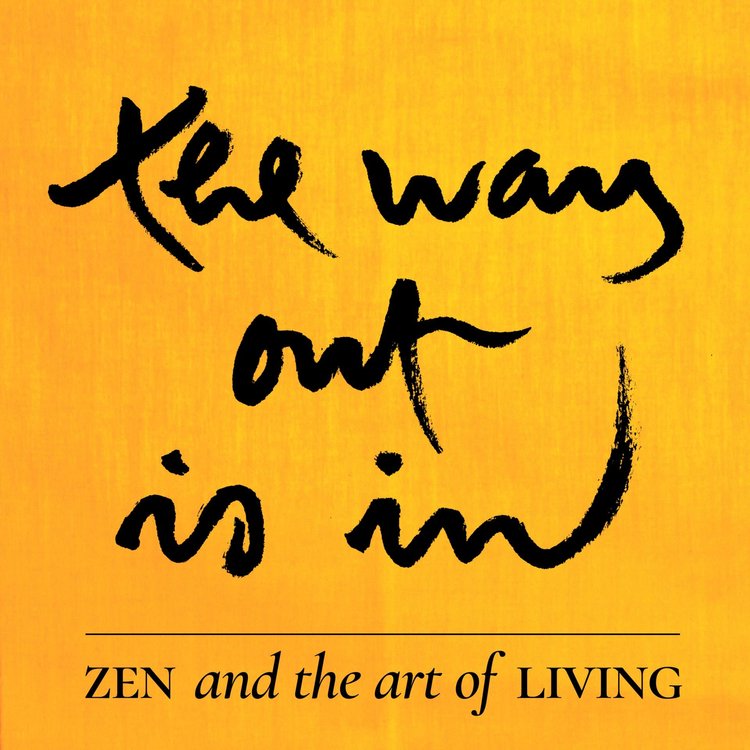
Resource: “The Way Out is In” podcast

“The Way Out is In” is a podcast produced by Plum Village. It’s co-hosted by Brother Phap Huu, Thich Nhat Hanh’s personal attendant for 17 years and the abbot of Plum Village’s Upper Hamlet, and Jo Confino, who works at the intersection of personal transformation and systems change.

For this week, I recommend Episode #94 on Silence.

Poem: Silence by Hafez

Mon, Feb 13

Silence by Hafez

 Read More 
 Forward to a Friend 
 Contact Me 
linkedin

AMB Coaching, Portola Valley, CA 94028, United States

Unsubscribe