

Practices

Practice: Transforming Anger

Taming the Tiger Within

“If your house is on fire, the most urgent thing to do is to go back and try to put out the fire, not to run after the person you believe to be the arsonist”
— Thich Nhat Hanh

The practice described here is inspired by Thich Nhat Hanh’s book Taming the Tiger Within- Meditations on Transforming Difficult Emotions. The tiger in his book represents anger. The idea is to transform this negative emotion into compassion, using the energy of mindfulness..

Here are the five steps recommended by Thich Nhat Hanh:

  • Recogize

  • Embrace

  • Investigate/Observe

  • Insight

  • Transform

Mindfulness recognizes, embraces and relieves. Mindfulness helps us look deeply inside ourselves to gain insight. Insight is a liberating factor. It allows transformation to happen. Let me explain.

Recognize

When anger rises, we first need to recognize it. One way is to say "anger rising" or a "part of me is angry". I notice my jaw tightening or my rib cage contracting making my breathing difficult or I am noticing my face getting hot, my throat closing down.
So when the energy of anger arises, we need to stop and take a few breaths.

Embrace

Then we need to embrace this difficult emotion and be with it, attend to it, accept it because you can take care of it and transform it into positive energy.
Thich Nhat Hanh writes "Anger is like a howling baby, suffering and crying. You anger is your baby. The baby needs her mother to embrace her. You are the mother. Embrace your baby."
Just like our organs, anger is part of us. When we are angry, we have to go back to ourselves and take good care of our anger. We cannot say " Go away anger, I don't want you".
Just embracing your anger, just breathing in and out, that's is good enough.

Investigate/Observe

In the beginning you may not understand the roots or nature of your anger or why it showed up, but as you recognize it and embrace it, it will become clearer why anger is here. Overtime you may see its function, its good intentions, its flavor, shape and form. We hurt where we care and we care where we hurt.

You might ask yourself : what am I caring about right now in this situation? And you will get some relief and gain insight.

Insight

It could be that the seed of anger has been there for years, a seed you have been watering over and over again, it could be your own or one of your ancestry.

You will soon realize that the person or system you are angry with is not the source of your anger. You may be repeating some patterns you learned as a child.

In the same situation you are in, others may not get angry. If you are angry with someome else, the other person is not the real cause of your anger.

When anger arises it is best not to say anything or do anything. If you react with anger, you risk escalating the situation and cause more damage to yourself or the relationship with the other person and the other person may try to find relief by making you suffer more. It is best to reconnect with yourself and look deeply into the nature of your anger to see how it has come about. This may take a while and repeated practice.

Later you may realize that you may have been confused, hurt, that you did not have the whole story. Or you may touch into the depth of your own caring.

If you can forgive yourself and/or the other person, please do so.

Transform

When you understand the nature of suffering (yours and the one of the opposite party), anger will vanish because it will be transformed into compassion.

When we are overwhelmed by fear or hate or anger, we forget that there are other kinds of energy inside of us: love, kindness, hope. When you touch the seed of understanding, mindfulness and loving-kindness in you, these qualities grow stronger for both you and the other people around.

This practice of transforming anger is key to any relationship but is particularly important to activism and advocacy: it's more impactful and does not lead to burn-out as staying angry does.
Zenmai- A Practice of Unfoldment in Nature

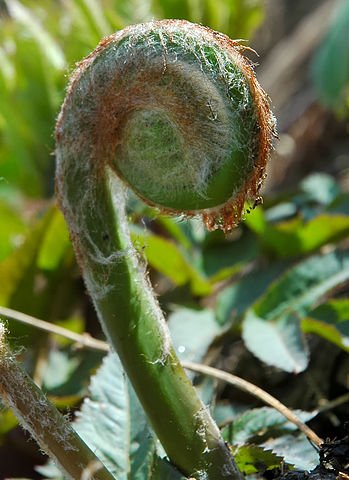
Zenmai is the Japanese name for the Asian Royal Fern or Osmunda japonica. It’s an edible fern that has also been proven to purify air indoors. This is a practice of unfoldment to be done in Nature. It’s inspired by my studying with Steve March (Aletheia) for coaching and Mark Coleman (Awake In the Wild) for mindfulness in Nature. I am grateful for their wisdom and teachings.

Start by taking a long walk in nature where you can be mostly undisturbed. Refrain from talking to people and using your phone. Pay attention to all examples of zenmai or unfurling of leaves, ferns or other plants that you are encountering. Notice the life potential that is unfolding itself naturally in this process.

When you are ready, sit down for a meditation. Take a few deep breaths, inhaling through the nose and exhaling through the mouth. Gently close your eyes and turn your awareness to your breath. Once you feel settled and present, allow yourself to just be, let yourself unfold.

What are you feeling? What are you sensing in your body? What are you observing in this moment? Can you sense into your innate wholeness? Bringing back to mind one example of zenmai that you encountered during your walk, remember how beautiful it was in its own unfolding. Can you feel the same about yourself?


Trust that the life you want will unfold from where you are now. As you become more aware of the natural process of unfoldment, the one of the fern or leaves that you observed or your own that you are now experiencing, your trust in it will deepen. Accept, love, and value yourself exactly as you are.

When you are ready to end this practice, gently open your eyes and stretch.

How Can We Be Good Ancestors? Self-Reflection from the book The Good Ancestor by Roman Krznaric

This is a self-reflection from the book The Good Ancestor- A Radical Prescription for Long-Term Thinking by Roman Krznaric. It’s based on the six ways of thinking long that the author recommends.

Deep-Time Humility:
What have been your most profound experiences of deep time, and how did they affect you?

Intergenerational Justice:
What, for you, are the most powerful reasons for caring about future generations?

Legacy Mindset:
What legacy to you want to leave for your family, your community, and for the living world?

Transcendent Goal:
What do you think should be the ultimate goal of the human species?

Holistic Forecasting:
Do you anticipate a future of civilizational breakdown, radical transformation, or a different pathway?

Cathedral Thinking:
What long-term projects could you pursue with others to extend beyond your own lifetime?

Climate Action Lists from the book Regeneration by Paul Hawken

The following text is extracted from the book by Paul Hawken titled Regeneration- Ending the Climate Crisis in one Generation- p 249

1. CLIMATE CHECK LIST

Where to Start

A climate checklist is informed by straightforward principles. They help you guide your endeavors, from farms to finance, cities to clothing, groceries to grasslands, and are applicable to every level of activity: people, homes, groups, companies, communities, cities -and countries too. The guidelines are yes or no questions. Every action either moves toward a desired outcome or heads away from it. The number one guideline is the fundamental principle of regeneration. The remaining are outcomes of that principle.

  1. Does the action create more life or reduce it?

  2. Does it heal the future or steal the future?

  3. Does it enhance human well-being or diminish it?

  4. Does it prevent disease or profit from it?

  5. Does it create livelihoods or eliminate them?

  6. Does it restore land or degrade it?

  7. Does it increase global warming or decrease it?

  8. Does it serve human needs or manufacture human wants?

  9. Does it reduce poverty or expand it?

  10. Does it promote fundamental human rights or deny them?

  11. Does it provide workers with dignity or demean them?

  12. In short, is the activity regenerative or extractive?

How you apply, score, or evaluate these principles is up to you. Most of what we do does not tick all the boxes. However, like a compass, it shows us the direction and where to go. By employing these guidelines, you pivot and begin, action by action, bit by bit, step by step to create regeneration in one’s life. What am I eating? Why? How am I feeling? What is happening in my community? What am I wearing? What am I buying? What am I making? Etc.

2. CLIMATE PUNCH LIST

A punch list is a personal, group, or institutional checklist. Because of the differences among people, cultures, incomes, and knowledge, there is no one common or correct checklist. The top “ten” solutions to reverse global warming are an abstraction. The true top solutions are what you can, want, and will do. The value of a punch list is that when you commit to something, things can happen. A punch list can be for an individual, family, community, company, or city. It is the list of actions you or your group will undertake and accomplish over a predetermined span of time -one month, one year, five years, or more. You can make different lists for different time periods -this week and this year, for example. If you go to www.regeneration.org/punchlist you will find a kit, a worksheet, and more sample punch lists.

A sample punch list from an individual:

  1. Phase out single use plastics by use case, starting with food and beverage purchases outside the home and moving on to kitchen, bathroom, and lifestyle goods

  2. Purchase renewable energy credits for the energy use in my apartment.

  3. Set a clothing budget for the year of no more than ten new garments, at least 8 of which from vintage stores or smaller sustainable brands.

  4. Engage with a citizen’s climate action group, such as the Citizen’s Climate Lobby, to pressure my state and federal representatives to support climate policy and set ambitious emissions reduction targets.

  5. Support First Nations landback movements with recurring donations or by paying a land tax to the nations whose traditional lands I inhabit.

  6. Engage with my city council and other community groups to advocate for urban green space as well as the protection of open space preserves and local wildlife sanctuaries and/or corridors.

  7. Start or join a monthly climate and environmental justice reading group with friends and family to keep us all learning and in discussion about ways to joyfully hold one another accountable to Just Transition efforts.

If you need help creating your punch list, contact me. I’ll be glad to help.

Practice: Embracing the Unknown

Today as you start your solo meandering walk, preferably in Nature, bring this theme of Embracing the Unknown with you on the path. As you meander, forget about reaching a specific destination, or walking a number of miles, or being on a schedule or navigating a given trail. Let go of the need to know where you are going. Notice when your mind is busy trying to figure things out and pause to reconnect with your intention to practice Embracing the Unknown. Experiment with walking as if in a liminal space where you do not know what is next: whom you may encounter, what the next turn may show, or what else you may discover on the path. Pay special notice to what you may be attracted to in this special state of awareness and of any insights that the natural world may give you about Embracing the Unknown. When you get back home, journal about these images or insights to further understand the wisdom that you may received about releasing the need for certainty in life.

Cultivating Wabi Sabi- A Nature Practice

IMG_5241.jpg

Start by taking a long walk in nature where you can be mostly undisturbed. Refrain from talking to people and using your phone. Pay attention to all examples of wabi sabi that you are encountering. Can you see that a tree, among many other trees in the forest, does not judge itself, compare itself, blame itself? Can you see its beauty despite the fact that it may be twisted, decaying, broken, unbalanced or otherwise imperfect? Can you see how it still provides value for the forest ecosystem just by being there, despite (or may be because of) its imperfections?

IMG_5206.jpg

When you are ready, sit down for a meditation. Take a few deep breaths, inhaling through the nose and exhaling through the mouth. Gently close your eyes and turn your awareness to your breath. Once you feel settled and present, slowly reflect on a part of yourself that you may not have been fully accepting. How can you use the concept of wabi sabi to look at things differently? Can you see the beauty in this physical or character flaw? Bringing back to mind one example of wabi sabi that you encountered during your walk, remember how beautiful in and of itself it was, no matter its imperfections. Can you feel the same about yourself?

IMG_3704.jpg

Now reflect on the fact that you are original in this world. Can you see how -your mind, heart and body- are completely unique? Can you see that you too, like every thing else in this world, has value and worth simply by existing?

When you are ready to end this practice, gently open your eyes and stretch.

Embracing the Concept of Wabi Sabi to Love Your Perfectly Imperfect Self

Embracing the Concept of Wabi Sabi to Love Your Perfectly Imperfect Self

Wabi sabi finds beauty in imperfection and profundity in nature, accepting the cycle of growth, decay and death. It’s slow and uncluttered, and regards authenticity above all…